How the NEa upends ERE logic
Every kilowatt-hour that goes into an electric car is a litre of petrol or diesel that is not burned. That is what the ERE system is all about. Yet, those who charge the cleanest electricity sometimes receive the fewest EREs, or none at all, from the Netherlands Emissions Authority. Four rules from the NEa's Q&A are not in the law and contradict the system's purpose.

What the ERE system is intended for
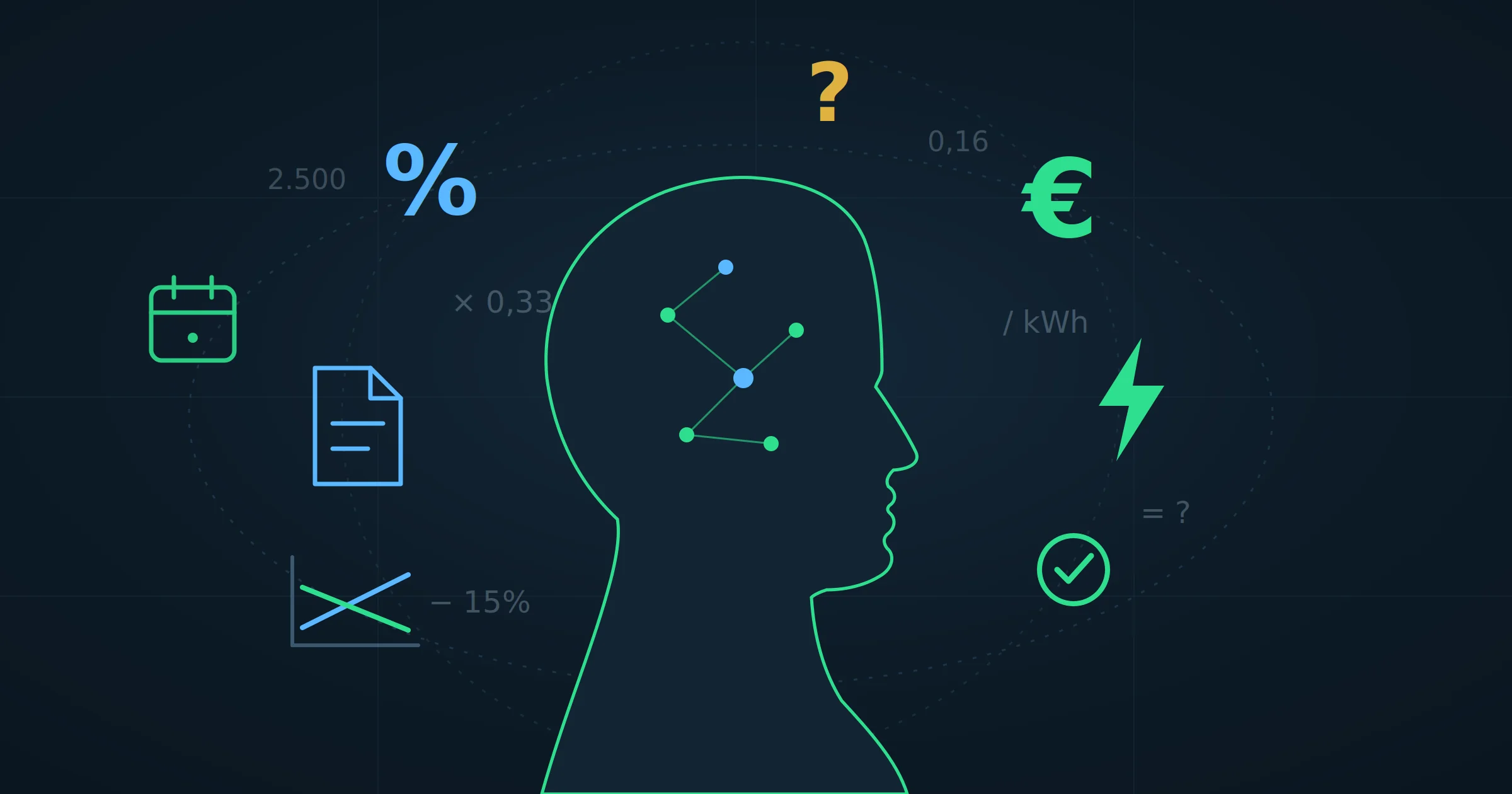
The ERE system results from the European Renewable Energy Directive (RED III). The goal in the Netherlands is a CO₂ reduction of at least 14.5% in the transport sector. One ERE represents one kilogram of CO₂ reduction in the chain, measured against an established fossil reference. The formula for electricity makes this visible: the number of EREs is the charged kWh multiplied by the renewable share multiplied by the fossil comparator of 183 grams of CO₂ per megajoule.
The idea is simple. A kWh in the battery replaces fossil fuel in the tank. The greener that kWh, the greater the climate benefit. Europe has explicitly given member states the option to include private charging points, and the Netherlands has chosen to do so. It was precisely the home charger that had to be included.
In practice, it works differently. In four situations, the NEa does not reward avoiding fossil fuels, or it rewards the least green electricity the most.
The solar panel penalty
According to the NEa, a private individual may not register more than they net from the grid. In its own example, someone draws 2,500 kWh, supplies 500 kWh of solar power back, and charges 3,000 kWh into their car. They may then register 2,000 kWh. One thousand kWh demonstrably charged into the car do not count.
From an ERE logic perspective, this is strange. Those 3,000 kWh each replace a piece of fossil fuel, and the solar power does so completely emissions-free. Anyone who charges their car with their own solar power thus achieves the greatest climate benefit but receives fewer EREs than their neighbour who draws everything from the grid. Moreover, the NEa deducts the returned solar power from the grid consumption, even though it is not grid power. This way, the same solar power is used against the private individual twice.
The regulation states something different. What the meter in the charging station indicates is registered; only power returned from the car does not count. There is no ceiling on grid consumption.
Private individuals never 100%, not even with self-generation
A company that generates its own solar power and charges it directly into cars can, under certain conditions, receive a 100% reward instead of the grid average of 50.5%. A private individual, according to the NEa, can never do this, no matter how green their electricity is.
The climate does not distinguish between a solar panel on a company roof and a solar panel on a residential house. Nor does the law make this distinction self-evident. The Energy Transport Decree declares the rules for self-generation “mutatis mutandis applicable” to private individuals who authorise a registration service provider. Why private individuals are then excluded is not explained by the NEa.
Own generation and SDE current: nothing at all
Does a company generate its own electricity that does not meet the strict 100% conditions? Then, according to the NEa, it may not register that electricity at the grid average either, because the electricity “does not come from the grid”. The same applies to electricity for which SDE subsidy has been received.
The result is that the same kWh, in the same car, with the same avoided emissions, is valuable if it comes from the grid and worthless if it comes from one's own solar panel. Green electricity thus yields less than grey. This is the opposite of what a climate instrument should do.
Here too, the law does not follow the NEa. The grid average is linked to supply via a connection and measurement at the charging station, not to the origin of the electricity. The ban on subsidy, according to the text, only applies to the 100% route. SDE subsidy rewards the generation of electricity; EREs reward the replacement of fossil fuel in transport. These are two different achievements.
An exception for concerns
While private individuals and independent entrepreneurs are assessed on every detail, a company with its own registration account, according to the NEa, may register without authorisation for charging points in the name of its 100% subsidiaries. Those who work through a registration service provider must sign a separate authorisation per private limited company.
The law requires that the registrant itself is a connected party, and anyone who registers for others is a registration service provider and requires authorisation per company. That large parties are treated more broadly than small parties on this point is difficult to explain. Moreover, the risk lies with the concerns themselves: the NEa can correct registrations up to five years back.
A Q&A is not law
The NEa is an implementer and supervisor. The rules themselves are set out in the Environmental Management Act, the Energy Transport Decree, and the Energy Transport Regulation. No policy rules have been published for these regulations. The four points above are only found in a Q&A on the NEa's website.
Nevertheless, they function as rules in practice. Registration service providers apply them as a precaution, verifiers test against them, and the registrant receives fewer EREs. This creates rules without democratic legitimacy, without explanation, and without anyone being able to object to them, as long as no decision has been made.
There are understandable concerns behind some rules, such as preventing double counting. The NEa mentions this, for example, with electricity generated with biofuel. But double counting is combated with good measurement and control, not by excluding the cleanest electricity from the outset.
What ERE-Vergelijk.nl thinks
The ERE system should reward what helps the climate: every kWh that replaces fossil fuel. Rules that penalise self-generated solar power, exclude private individuals, and favour large parties miss that goal. We have asked the NEa for clarification, and we ask the Ministry of Infrastructure and Water Management to clarify the Energy Transport Regulation.
What can you do now?
Private individuals with solar panels
Ask your registration service provider how they calculate your volume, and whether they apply the grid consumption cap.
Companies
keep your measurement data per charging point and record the basis on which you register.
In case of a rejection or correction by the NEa
Such a decision must be based on the law, not on a Q&A. Objections and appeals are possible.
We will update this article as soon as the NEa responds. This article provides general information and is not legal advice. Regulatory status: November 2026.
Was this article helpful?