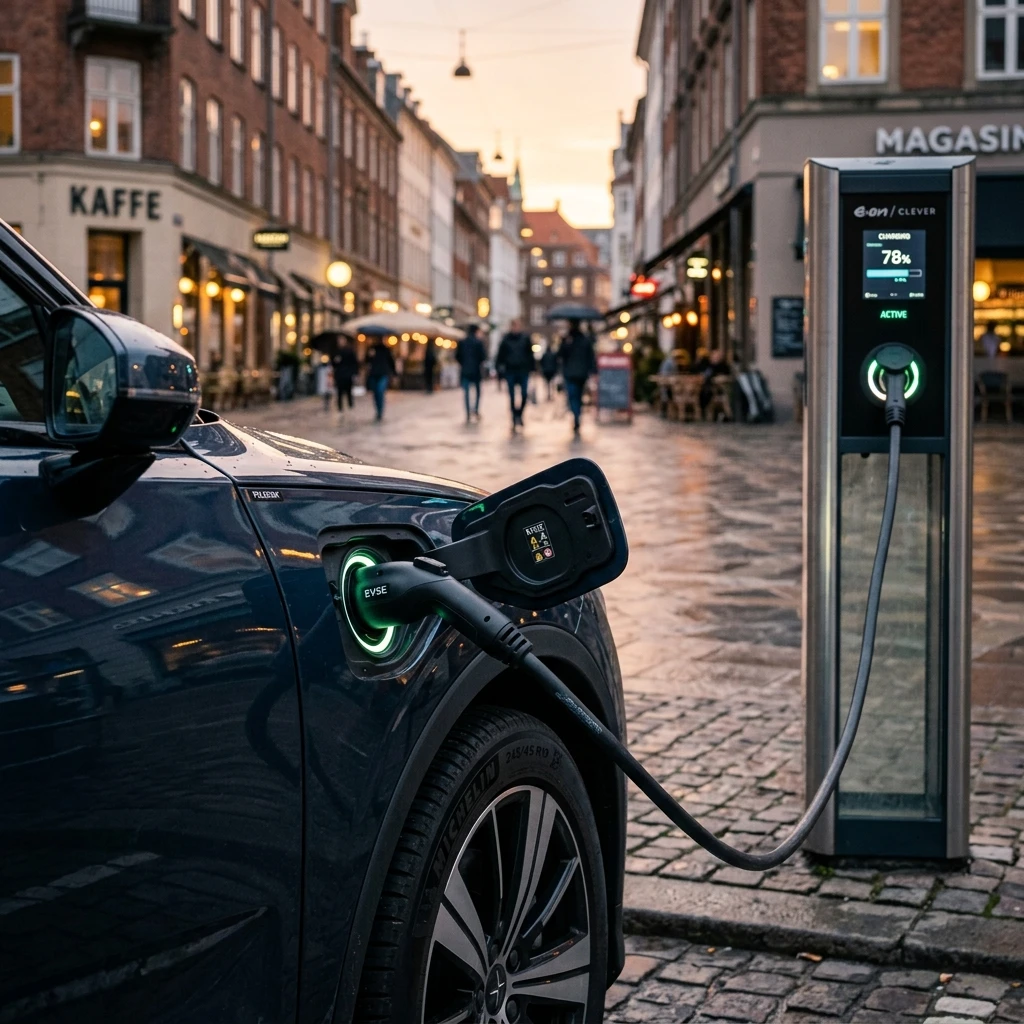
Charging station with MID meter: which wallboxes are suitable for ERE?
A MID-certified meter in your charging station is the primary condition for applying for ERE certificates (Emission Reduction Units for home charging). Which wallboxes have this built-in as standard? An overview of Alfen, Zaptec, and Wallbox.

Why is a MID meter mandatory for ERE?
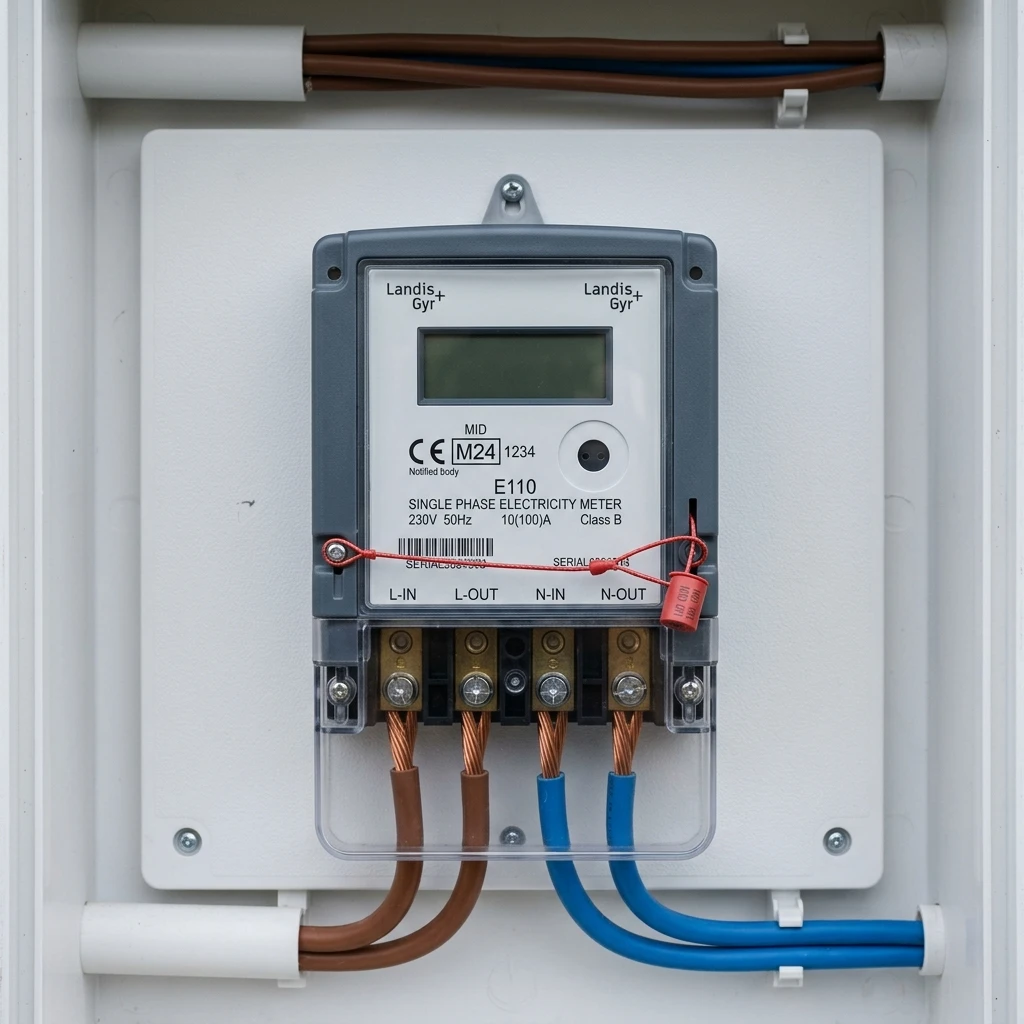
Anyone who wants to earn ERE certificates by charging at home cannot avoid it: the electricity must be supplied via a MID-certified meter. The Netherlands Enterprise Agency (NEa) only accepts metering data that complies with the European Measuring Instruments Directive — otherwise, there is no conclusive proof of how much kWh actually went into your car.
Practically, this means that a standard intermediate meter or a smart plug is not sufficient. The meter must be located in the charging station (or directly behind it), be sealed, and provide stable data year-round to the registration service provider — the NEa-registered intermediary who registers your charging data with the NEa and applies for ERE certificates on your behalf.
Important: a MID meter is not legally mandatory if you simply want to charge without participating in the ERE scheme. The obligation applies exclusively in the context of ERE participation — and for business reimbursement of charging costs with an employer (where certified metering is also required).
One exception: if a grid connection is used exclusively for charging — for example, a separate business connection for a fleet or a public charging point — the grid operator's MID-certified main meter may suffice. In that case, the NEa refers to an 'exclusively metered allocation point' — in its guidance document for home chargers (Dutch) the only exception to the MID requirement it names. For private individuals, who have their charging station behind the same meter as their refrigerator and washing machine, a MID meter in the charging station is therefore almost always necessary.
What exactly is a MID meter?
MID stands for Measuring Instruments Directive, the European directive that regulates measuring instruments such as electricity meters. A MID meter (EU Directive 2014/32/EU) is a calibrated electricity meter that meets strict accuracy requirements. The most commonly used class for charging stations is Class B, which means a maximum measurement deviation of ±1%. Class A (±2%) is generally not sufficient for ERE registration — consult the NEa for current technical requirements. Like the smart meter in your meter cabinet, it is sealed by the manufacturer and cannot be easily read out or tampered with.
Technically, the MID meter measures the electrical energy (kWh) that has flowed through using an electronic measuring element. The measured data is transmitted via the charging station (typically via an internal data protocol) to the charging station's management software and then — automatically or via a manual meter reading submission — supplied to the registration service provider.
You can recognise a charging station MID meter by the Μ-marking (the letter M in a rectangular frame), followed by the last two digits of the inspection year and the identification number of the inspection body. When in doubt: ask the manufacturer or installer for the MID certificate of your charging station type, or consult the NANDO database of the European Commission for notified inspection bodies.
Alfen Eve Pro-line — integrated MID meter
Alfen is the Dutch manufacturer behind, among others, the Eve Single and Eve Double Pro-line. These models have an integrated MID meter and have been the de-facto standard for business and public charging points in the Netherlands for years.
For home charging, the Alfen Eve Single Pro-line is particularly popular: one connection, MID meter, dynamic load balancing, and a robust outdoor casing. The charging capacity ranges from 3.7 kW (1-phase) to 22 kW (3-phase, 3×32A). Practically all ERE providers support Alfen out-of-the-box.
Please note: the Eve Single Pro-line cannot switch between 1- and 3-phase based on available solar panel power. Those who want to charge a lot using solar power may find this a disadvantage. In addition to the Pro-line, Alfen also offers the Eve Single S-line (also with an integrated MID meter, lighter casing, available with a fixed cable or socket).
Zaptec Pro and Go 2 — both with integrated MID
The Zaptec Pro is a Norwegian design that is rapidly gaining ground in the Netherlands. Compact, modular (connectable up to 99 units) and with an integrated MID meter — ideal for both single-family homes and Owners' Association (VvE) projects.
For pure home chargers, since 2024, the Zaptec Go 2 is the consumer model with an integrated MID meter. The Go 2 also supports bidirectional charging (V2G/AC V2G): the hardware is prepared for vehicle-to-grid applications, depending on the car and available software. In addition, it is prepared for solar charging and can switch between 1- and 3-phase based on available power. Please note: the older first-generation Zaptec Go does not have a built-in MID. You can recognise the generation by the model: the Go 2 is equipped with a built-in LCD display for real-time energy monitoring; the original Go does not. See which ERE providers support the Zaptec Go 2.
According to the NEa, constructions with an external MID meter outside the charging station are permitted in 2026 as a transitional arrangement, but no longer from 1 January 2027. For those purchasing a charging station now, the Pro or Go 2 is therefore the future-proof choice.
Wallbox — no integrated MID in the Pulsar and Commander lines
Wallbox from Spain is a popular choice in the entry-level segment, with the Pulsar Plus and the more business-oriented Commander 2 as the best-known models. Both do not have a built-in MID meter; for exact kWh measurement, an external MID intermediate meter (single- or three-phase) is placed on a DIN rail next to the charging station and connected to the wallbox via an RS485 cable.
With the 1 January 2027 cutoff for external MID intermediate meters, this becomes a problem: from that moment, these Wallbox models without integrated MID will no longer be suitable for ERE registration. Wallbox does have a commercial variant — the eM4 — with integrated MID meters, but this is aimed at public and business charging infrastructure.
Other brands with integrated MID
In addition to Alfen and Zaptec, there are more manufacturers that supply charging stations with a built-in MID meter — a reassurance for those with a specific brand or design in mind. The most commonly used models in the Netherlands:
Easee — Charge Max and Charge Pro (Charge Up, Charge Core, and Charge Home do not have MID). The Charge Max is the home model (up to 22 kW, Class B ±1%, automatic 1-/3-phase switching for solar power, RFID, and app management). The Charge Pro adds scalability for multiple charging points and is suitable for business environments.
Ratio EV — io6 Pro and io7 (Dutch brand). The io6 Pro is available with a fixed cable or socket; the io7 is a double charging pole (2×22 kW) for businesses or Owners' Associations (VvE's).
Peblar — Home Plus (for private individuals) and Business (commercial, with OCPP and dynamic load balancing) — Dutch brand
EVBox — Liviqo (note: Livo and Livo 2 are guaranteed not to have MID)
Tesla — Wall Connector Gen 3 in the MID version (to be ordered specially; manageable via the same Tesla app as your car; suitable for all EVs with Type 2)
ABB — Terra AC Wallbox
Smappee — EV One
Raedian — NEO and Nex (compact and relatively affordable; the NEO is also available through a trade-in promotion with some registration service providers)
KEBA — KeContact P30 line (multiple variants with built-in MID meter)
Mennekes — Amtron Professional line (all charging stations in the Professional series are equipped with a MID-certified kWh meter)
Ohme — Home Pro MID (consumer model with MID meter, charges smartly based on dynamic energy prices; specifically interesting for home chargers and lease drivers)
Coolblue — BlueBuilt (MID-certified)
Schneider Electric — EVlink Pro AC and Charge Pro (available with and without MID — pay attention when purchasing)
Autel — MaxiCharger AC (MID)
Brands that fall short include the Myenergi Zappi, Huawei Smart Charger, and Growatt THOR — which do not (yet) have an integrated MID. When in doubt, always check the official MID certificate with the manufacturer.
Overview: integrated MID meter per model
Always check the current specifications with the manufacturer — the offerings change regularly.
How do you apply for ERE certificates with a MID charging station?
Once you have a suitable charging station with an integrated MID meter, the application process generally proceeds as follows:
Choose a registration service provider that supports your brand and model (compare providers).
Register with that registration service provider via their website or app — you will need your EAN number (of your energy connection), the brand and type of charging station, and sometimes a photo of the installation.
Charging sessions are registered by the MID meter in the charging station; in many cases, you provide the meter reading quarterly or annually (via a photo or automatically via the app).
The registration service provider submits the kWh data to the NEa and receives ERE certificates, which they trade on your behalf.
You receive payment — usually annually — based on the market price of the ERE certificates at the time of trading.
The compensation in July 2026 is around approximately €0.16–0.17 per charged kWh. With 3,000 kWh per year and an average compensation of €0.16/kWh, this yields €480 per year. A new MID charging station costing around €800–1,500 (including installation) therefore pays for itself in roughly 2–3 years — depending on the charging volume used, the current ERE price, and the chosen provider.
How many ERE certificates do you generate per kWh?
For each kWh charged, you receive approximately 0.33 ERE (Emission Reduction Unit) as a private individual; business charge points that can demonstrably supply 100% renewable electricity (via GoO certificates) reach approximately 0.66 ERE per kWh. The value of one ERE is determined on the market by supply and demand. In July 2026, that value is approximately €0.48–0.50 per ERE, which amounts to approximately €0.16–0.17 per charged kWh. For more context on price developments, see the ERE price article in our knowledge base.
Existing charging station without MID — what now?
Do you already have a charging station without an integrated MID meter? In 2026, an external MID intermediate meter (€200–€500 including installation by a certified electrical installer) can still offer a solution. The price depends on the type of installation: a 1-phase external MID intermediate meter is cheaper than a 3-phase variant; the installation conditions (distance from DIN rail to charging station, existing cabling) affect labour costs.
However, from 1 January 2027, external MID intermediate meters will no longer be accepted for ERE registration — the NEa has stipulated this. Consult emissieautoriteit.nl for the most current regulatory status.
The sustainable route is therefore replacement with a charging station with an integrated MID meter, such as the Alfen Eve Pro-line, Zaptec Pro, or Zaptec Go 2. As a budget-friendly alternative, the Raedian NEO (with a built-in MID meter) is also available. A new MID charging station costs roughly €800 to €1,500 including installation. At 3,000 kWh/year and an ERE compensation of €0.16/kWh, this yields €480/year, meaning the investment is recouped in 2–3 years with average use. Please note: these are indicative figures — the actual payback period depends on your charging volume, the current ERE market price, and the rates of your registration service provider.
Which provider suits your charging station?
Not every ERE provider supports every wallbox. Compare the providers that accept your brand and model.
Compare providersThis information is indicative and based on the rules of the Netherlands Enterprise Agency (NEa) and publicly available product specifications as they applied at the time of publication. Before purchasing, always check the current specifications with the manufacturer of your charging station and consult emissieautoriteit.nl for the most recent regulations regarding MID meters and ERE registration. NEa regulations may change; for time-sensitive decisions (such as the 1 January 2027 deadline), always consult the current version with the NEa. No rights can be derived from the content of this article.
Was this article helpful?